What You See Inside the Cueva de Nerja
The five halls, in walking order
Sala del Vestíbulo (Vestibule Hall): you enter here. It is the largest opening to daylight, and the light changes as your eyes adjust. The hall is spacious; this is where groups gather at the start.
Sala del Belén (Bethlehem Hall): the next chamber. It gets its name from the shapes of stalactites and stalagmites (local legend sees a nativity scene in the formations). This is where you start descending deeper.
Sala de la Cascada, aka Sala del Ballet: a vaulted chamber named for the cascade of water in summer (November–June) or the ballet-like shapes of the formations. An international festival of music and dance has been held here every summer since 1960 — performances echo beautifully in this space.
Sala de los Fantasmas (Hall of Ghosts): the shapes of stalagmites and shadows play tricks on the eye. This is where the cave starts to feel ancient and otherworldly. Most visitors remember this hall most vividly.
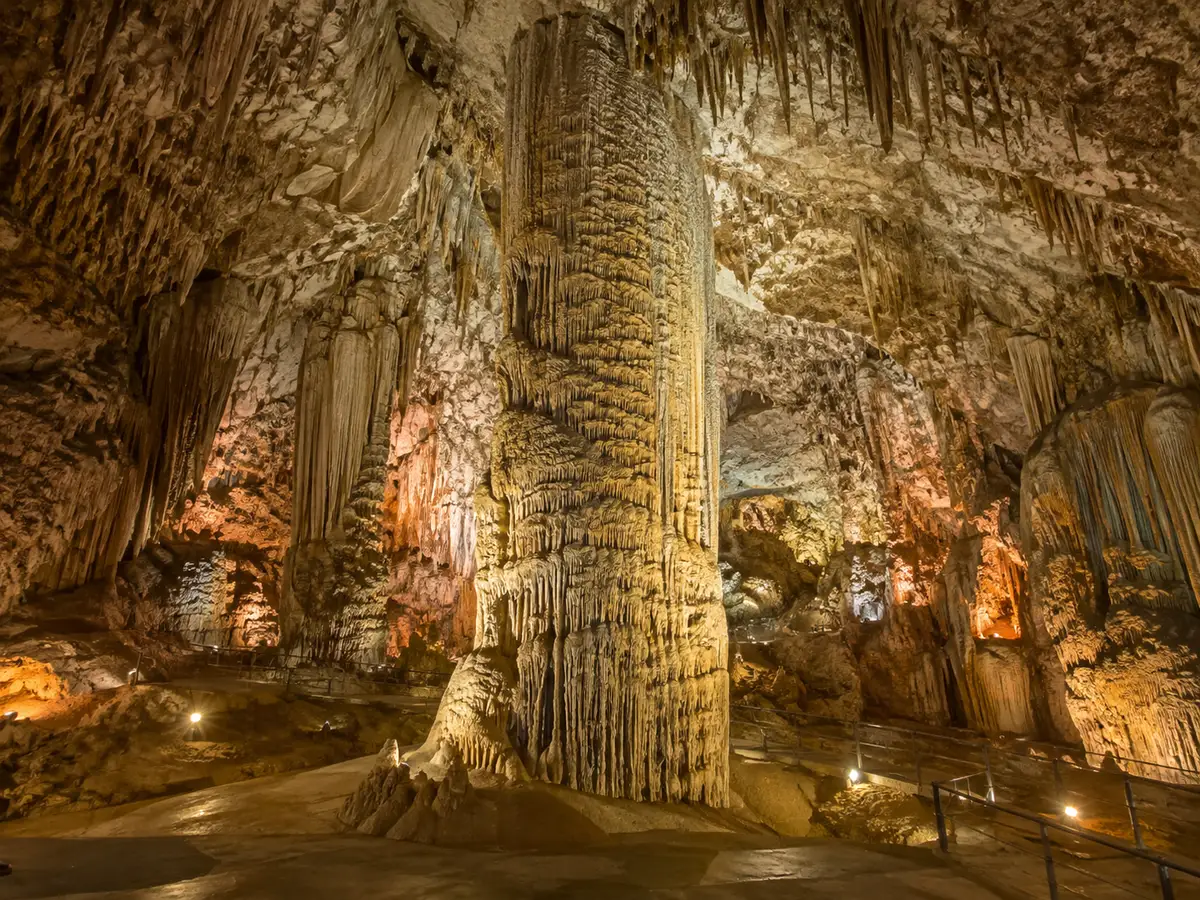
Sala del Cataclismo: the final chamber on the tour. It holds a 32-metre rock column — the largest in the world. This is the showstopper. The cave falls silent when people see it; the scale is overwhelming.
The 32-metre column: the world’s largest
The Sala del Cataclismo takes its name from a geological event (cataclismo means catastrophe or collapse). A massive stalactite and stalagmite fused into a single column 32 metres tall. I have walked through many caves on the Costa del Sol, and I have never seen anything like it. When you stand below it, you are looking at 200,000 years of mineral deposit. It alone justifies the €16 entry.
The paintings: closed galleries
The cave has Paleolithic cave paintings (roughly 30,000 years old, Upper Paleolithic to Neolithic era). You will not see them on a visitor tour. They are in closed galleries deeper in the system, protected from light and touch. Only archaeologists and conservation teams access them. If you are hoping to see ancient hand stencils or ochre drawings, you will be disappointed.
Stairs and walkways
The entire route is stairs and railed walkways. No caving gear, no crawling, no technical climbing. But the stairs are steep in places, and some are wet (water seeps through the cave year-round). Wear closed, comfortable shoes with good grip. There are no handholds other than the metal railings, and the path is narrow in a few sections. Wheelchair users cannot do this tour.
Temperature
The cave stays at 19 °C year-round — cool but not freezing. Bring a light layer even in summer. See what to wear inside the cave for full details.
See how long the visit takes, timed entry slots, and whether it is worth it.
The Sala del Cataclismo (the world’s largest column) is the highlight. Wear closed shoes with grip; the stairs are steep and wet. Budget about 50 minutes from the entrance to the exit.
Frequently asked questions
What is the Sala del Cataclismo?
The final chamber on the tour, which holds a 32-metre rock column — the largest in the world. It is formed by a stalactite and stalagmite fused together over 200,000 years. It is the showstopper of the cave.
Can I see the Paleolithic cave paintings?
No. The paintings (roughly 30,000 years old) are in closed galleries protected from visitors. Only archaeologists and conservation teams access them. The visitor route does not include them.
How many rooms are in the cave?
Nearly 5 km of surveyed galleries exist in total. The tourist route covers roughly a third of the cave, passing through five main halls: Vestíbulo, Belén, Cascada, Fantasmas, and Cataclismo.
Are there concerts or events inside?
Yes, an international festival of music and dance has been held in the Sala de la Cascada every summer since 1960. If you are in Nerja in July or August, check the official site for dates.
What footwear do I need?
Closed, comfortable shoes with good grip. The stairs are steep and wet in places. No high heels, sandals or flip-flops. See what to wear for full details.
Plan sorted? Book a timed slot with the audio guide included — free cancellation up to 24 hours before on most options.