Key takeaways
- €16 online beats €18 at the gate — the GetYourGuide ticket includes the audio guide and skips the queue. Compare gate prices and online ticket prices.
- Free entry exists at 9:15 Monday to Friday (public holidays excluded, that turn only). How the free slot works and why you might prefer a paid option.
- Entry is by timed slot every 30 minutes; arrive about 10 minutes early. How the timed-slot system works and why slots sell out in summer.
- The visit takes about 50 minutes on the tourist route — a third of the 5 km of surveyed galleries. What 50 minutes actually covers and how to make a day of it.
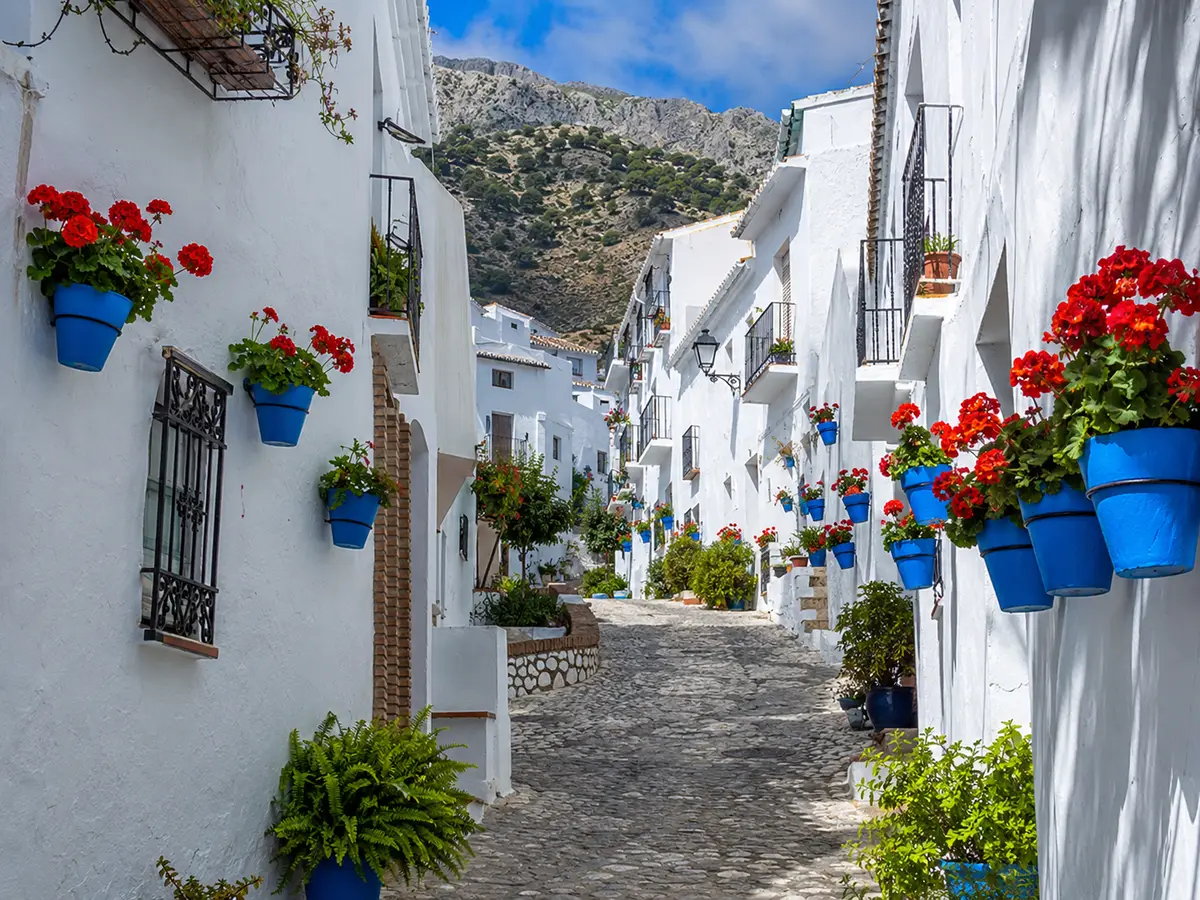
- Day trips from the coast bundle the cave with Frigiliana, the white hill village visited on every guided option. Day trips from Málaga, Torremolinos, Granada and Nerja town.
What you get with the Cueva de Nerja visit
The timed entry, the route and what the audio guide covers — at a glance.
On the route
- Sala del Vestíbulo (entrance hall)
- Sala del Belén (Nativity hall)
- Sala de la Cascada (Waterfall/Ballet hall — summer festival venue)
- Sala de los Fantasmas (Ghosts hall)
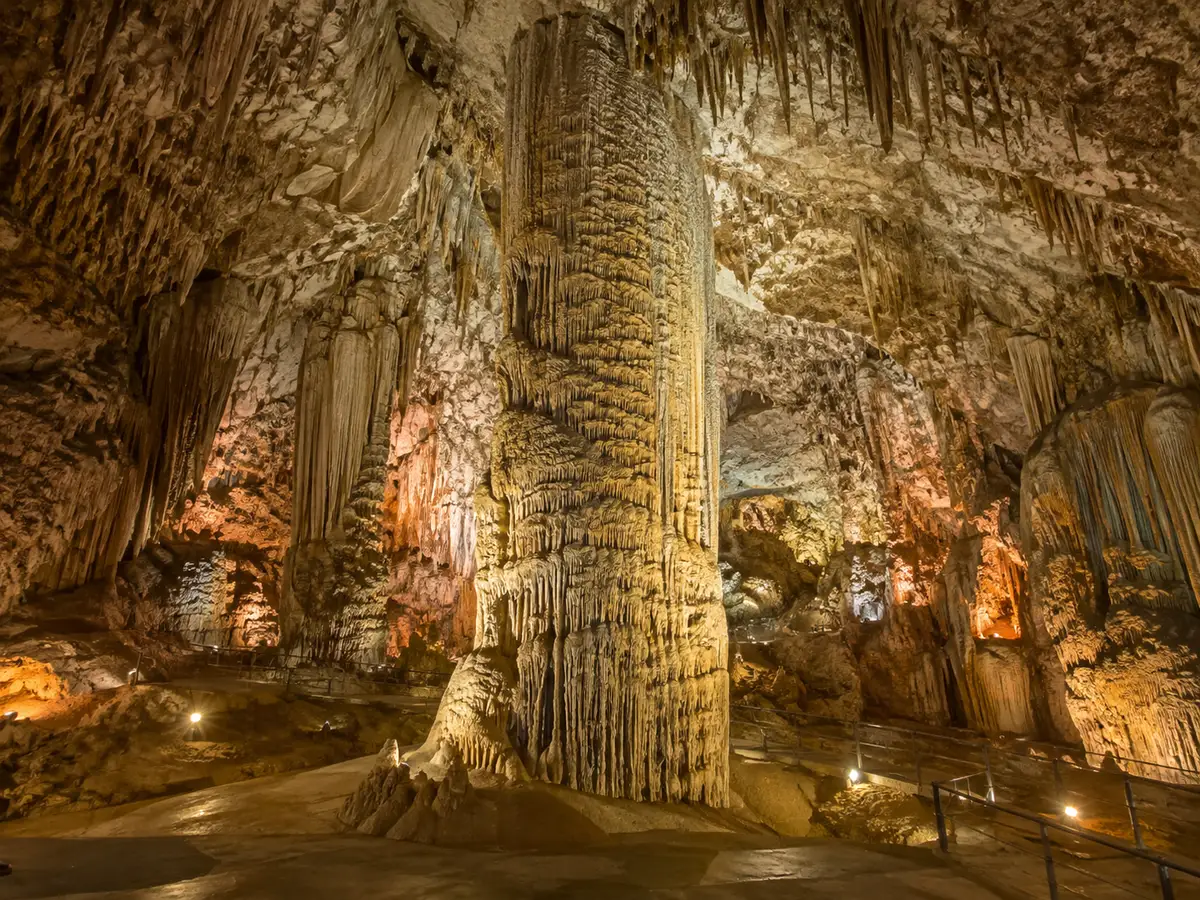
- Sala del Cataclismo (Cataclysm hall with the 32-metre column)
What’s included & what to know
- 15-language audio guide (German, Arabic, Chinese, Korean, Spanish, Dutch, French, English, Italian, Polish, Norwegian, Russian, Swedish, Portuguese, Japanese)
- Timed slot every 30 minutes; arrive ~10 minutes early
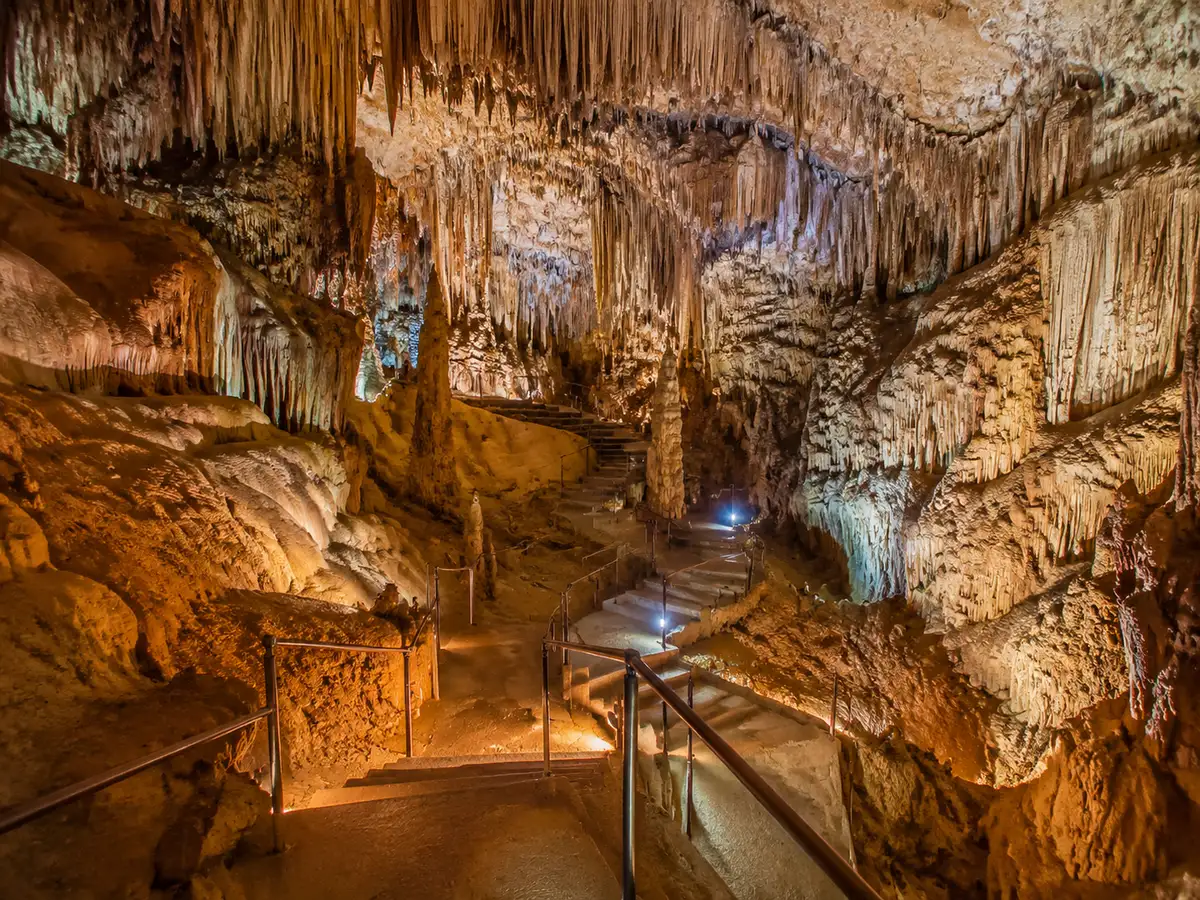
- About 50 minutes on the route; nearly all stairs and railed walkways
- 19 °C year-round; bring a light layer
- Not suitable for wheelchairs or strollers
What you see, in order
The five halls on the tourist route — from entry to the world’s largest rock column.
Entry is by timed slot every 30 minutes. Arrive about 10 minutes before your slot time. The route is nearly all stairs and railed walkways. The 15-language audio guide is included with the online ticket.
- Sala del Vestíbulo — The entrance hall where the cave opens to the outside air, with early daylight reaching the back walls.
- Sala del Belén — The Nativity hall, named for formations that suggest figures in a nativity scene. One of the oldest inhabited sections.
- Sala de la Cascada — The Waterfall (or Ballet) hall, where an international music and dance festival runs every summer inside the cave. Named for the cascade of stone formations.
- Sala de los Fantasmas — The Ghosts hall, where shadows and light play across formations. One of the deeper sections of the tourist route.
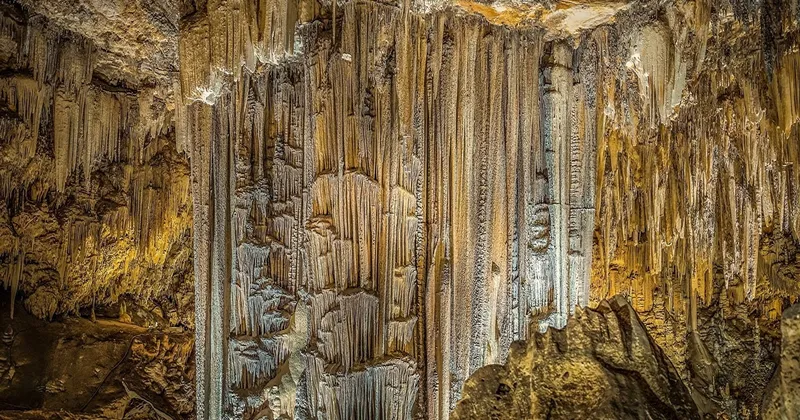
- Sala del Cataclismo — The Cataclysm hall, home to the 32-metre rock column — the largest single column in the world. The final stop on the route.
The whole walk takes about 50 minutes on the official route. From here you can continue to the full breakdown of each hall and what the closed galleries hold, or plan a day trip combining the cave with Nerja town and Frigiliana.
How booking works
Pick your option
Gate ticket (€18), online ticket + audio guide (€16), or a full day trip (€57–€69).
Check live times
See real availability and prices from GetYourGuide (instant confirmation, free cancellation on most).
Book in seconds
Reserve your timed slot. Your confirmation has everything you need.
Just turn up
Arrive 10 minutes early. Audio guide downloads to your phone or a rental device at the entrance.
Nerja: Caves Entry Ticket with Audio Guide
Book the €16 online ticket. Includes audio guide, skips the queue, and locks your timed slot.
Three ways to visit the Cueva de Nerja
Gate ticket, online ticket with audio guide, or a full day trip. How they compare.
| Best valueNerja: Caves of Nerja Entry Ticket with Audio Guide | From Málaga: Caves of Nerja, Nerja and Frigiliana Day Tour | Nerja Caves, Nerja & Frigiliana Day Trip with Pickup | |
|---|---|---|---|
| Option | Online ticket + audio guide | Day trip from Málaga | Day trip with pickup |
| Price | €16 | €69 | €69 |
| Duration | ~50 minutes | ~9 hours | ~7.5 hours |
| What’s included | Cave entry, audio guide, skip queue | Cave, Nerja, Frigiliana, live guide | Cave, pickup, Nerja, Frigiliana, guide |
| Group size | Self-guided with audio | Small, live guide | Small, live guide |
| Rating | 4.6★ (2,042 reviews) | 4.7★ (2,920 reviews) | 4.6★ (556 reviews) |
| Book this → | View → | View → |
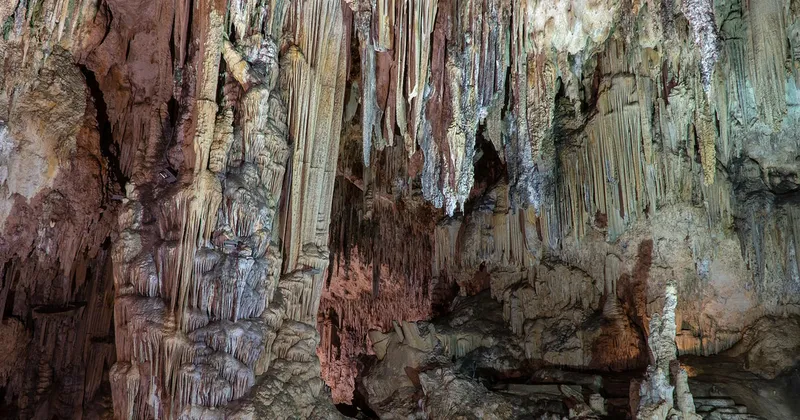
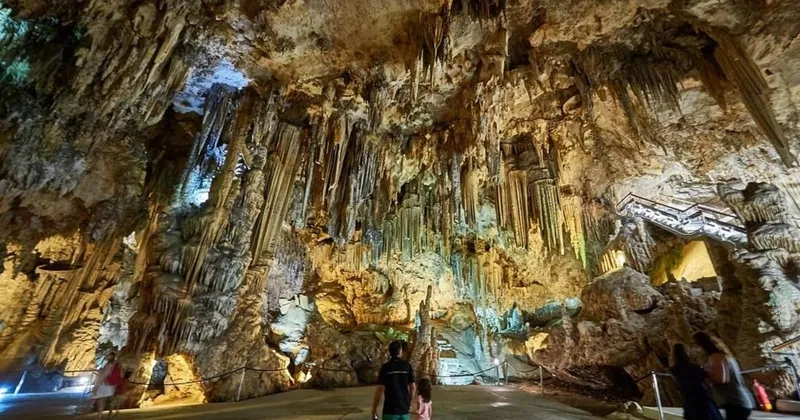
Photo Gallery
Cueva de Nerja — through the lens
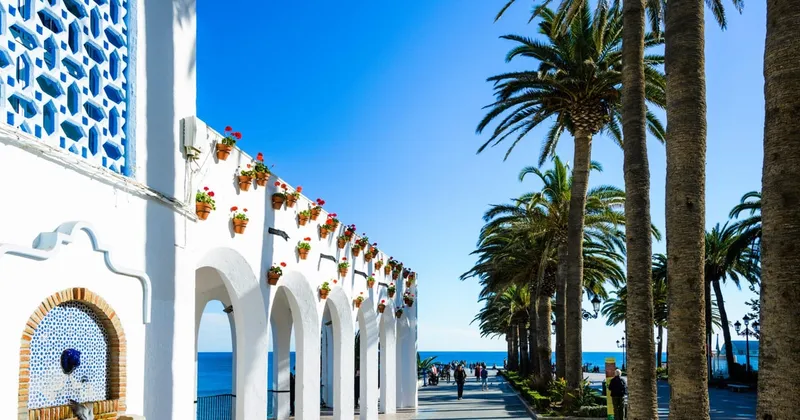
The halls, the 32-metre column, the Balcón de Europa and Frigiliana on a day trip.
Cueva de Nerja tickets & tours
From the €16 online ticket to day trips from Málaga, Granada, Torremolinos and Nerja.
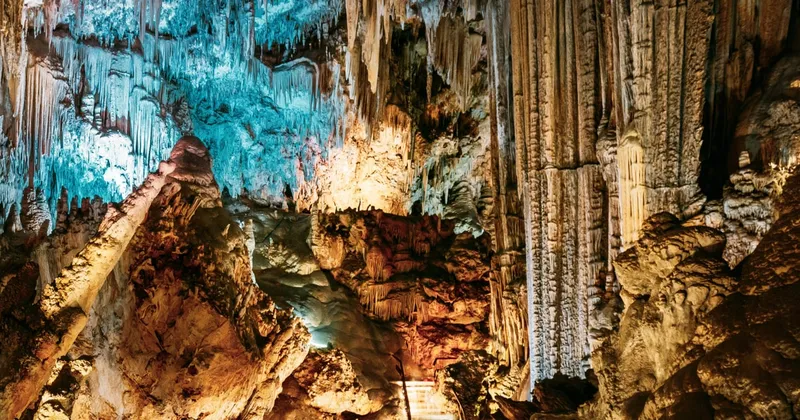
Skip the ticket lineEntry + audio guideNerja: Caves of Nerja Entry Ticket with Audio Guide
 From Nerja townEntry fee included
Excursion to Nerja and Frigiliana with Admission to the Nerja Caves
BestsellerEntry fee includedFrom Málaga: Caves of Nerja, Nerja and Frigiliana Day Tour
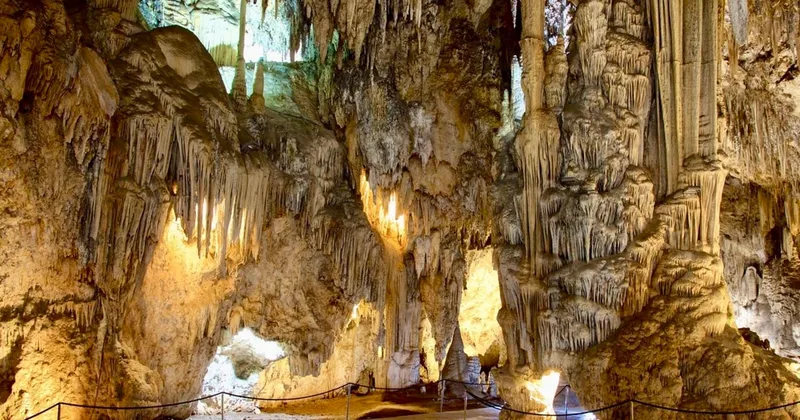 Hotel pickupEntry fee included
Nerja Caves, Nerja & Frigiliana Day Trip with Pickup
 From GranadaEntry fee included
Granada: Nerja Caves, Nerja, Frigiliana, and Beach Day Trip
 PrivateEntry fee included
From Motril: Nerja, Frigiliana and Caves Private Tour
What guests say about visiting the Cueva de Nerja
Real reviews from travellers who booked the cave entry and day trips we feature.
Very impressive. The size and story of the caves. The audio guide was excellent.
Got through in about 40–45 minutes when it was quiet. Friendly staff and uncomplicated entry.
Brilliant caves and good audio. Wished for a few more signs inside, but very worth it.
Guide Janet was warm and funny and knowledgeable. Enough time at each stop.
Travelled with children aged 5+. Couldn't have found anything better. Juan and Virginia were fantastic.
Guide was enthusiastic and easy from booking to meeting point. Well organised tour.
Ratings and reviews are the operators’ live GetYourGuide figures. Read our full tour reviews ›
Quick answers before you book
The essentials so you know the cost, what to wear, how long it takes, and what to expect.
What’s the entrance fee?
At the ticket office: €18 general admission, €14 for over-65s. Online ticket is cheaper at €16 with audio guide. Free entry at 9:15 Monday to Friday only (public holidays excluded).
How long does the visit take?
About 50 minutes on the route, plus arrive 10 minutes early. Half a day with Nerja town; a full day with Frigiliana.
Is there a free entry time?
Yes: 9:15 on Monday to Friday (excluding public holidays, that turn only). How the free slot works and when the paid ticket might be smarter.
What should I wear?
Light layer over summer clothes and closed, comfortable shoes — the route is nearly all stairs and the cave is 19 °C year-round. Not caving gear; it’s a railed walkway.
How do I get there from Nerja?
By taxi: €6–€8, about 5 minutes. The cave is above Maro, 4 km from Nerja town. From Málaga, Granada, Torremolinos and parking at the cave.
Can I see the cave paintings?
No. The Paleolithic paintings are in closed galleries off the tourist route. What the five open halls show and why the paintings stay closed.
Is it worth visiting from Málaga?
An Uber from Málaga to Nerja costs about €74, but a €69 day trip includes the cave, Nerja town and Frigiliana with a live guide and free cancellation. Day trips from Málaga, Torremolinos and Granada.
When should I visit?
April to October (July driest, November wettest). Book ahead in summer; slots sell out. Early morning slots are quietest. Crowd patterns, festival dates and why the first slots matter.
Can’t make these dates?
Browse more available cuevas de nerja tickets and find one that fits your schedule — all with instant confirmation and free cancellation.
The Cueva de Nerja, explained
I grew up in Maro, the village directly above the cave, and I have walked groups through the galleries for over a decade. The Cueva de Nerja is not what most visitors expect when they arrive. It is not a museum. It is not lit by theatrical spotlights the whole way. It is a real limestone cave with 30,000 years of human occupation, where five boys from Maro found the main entrance on a January afternoon in 1959, and it opened to the public in 1960. Everything about it — the cost, what you see, how to get there, why you might pair it with Frigiliana instead of doing it alone — matters for the booking decision.
What the 1959 discovery changed
On 12 January 1959, five boys from Maro found an opening in the limestone above the village while hunting. They had discovered the entrance that became the Sala del Vestíbulo. The cave itself had been inhabited on and off for thirty thousand years — the Upper Paleolithic through the Neolithic. The cave was known to exist; locals had always seen water emerge from springs below. But that one January morning changed everything. The caves opened to the public in 1960. By then, an international festival of music and dance had been announced to run in the summer inside the Sala de la Cascada. That festival still runs every summer, fifty years later. Today the cave is run by the Fundación Cueva de Nerja, the official body. I work with it as a licensed guide.
What the tourist route actually shows
Nearly 5 km of surveyed galleries exist. The tourist route covers roughly a third of them. You enter at the Sala del Vestíbulo, walk through the Sala del Belén (the Nativity hall), the Sala de la Cascada (where the festival runs), the Sala de los Fantasmas, and finish at the Sala del Cataclismo, where the 32-metre column stands. That column is the largest single rock column in the world. It is real. It is spectacular. A 50-minute walk, mostly stairs and railed walkways, covers the entire route. The cave is 19 degrees Celsius year-round, so bring a light layer even in July.
What the route does not show: the Paleolithic cave paintings. They exist, in the closed galleries off the tourist path. They are not guarded because they are fragile. They are sealed because 30,000 years of human handprints and ochre figures deserve to survive longer than another 50 years of visitor humidity. The audio guide explains this plainly. Guests who come expecting to see paintings leave disappointed. That is honest. I tell them upfront.
The €18 vs €16 vs free question
At the ticket office, general admission is €18 (over-65s €14). The GetYourGuide online ticket is €16 and includes the 15-language audio guide — a €5 value. So the obvious choice: book online, pay less, skip the queue, lock your 30-minute timed slot (slots run every 30 minutes, and in summer they sell out by noon).
But everyone asks about the free entry. There is a free slot at 9:15, Monday to Friday only, excluding public holidays. That turn only. No audio guide. You might queue for 45 minutes on a summer Tuesday morning. You might sail straight through. You will not know until you arrive. I have guests who try the free slot and regret it. I have guests who do it and feel clever. The €16 ticket removes the gambling. You know your time, you have the guide, you spend less than the gate price. For most people, it is the right bet.
How timed slots work and why summer matters
Entry is by timed slot every 30 minutes. You need to arrive about 10 minutes before your slot time. The first weekday slot is 9:15. The last is around 17:15 in summer. Busy days — July, early August, weekends — the midday slots fill by 10:00 in the morning. Book two or three days ahead in summer if you want flexibility in timing. In winter (October to April), slots rarely fill. You can often book same-day. The summer trap is real: arrive at noon, try to buy a gate ticket, watch sales close at 12:40, watch the cave shut at 13:00. Do not do that. Book ahead.
The case for pairing the cave with Frigiliana
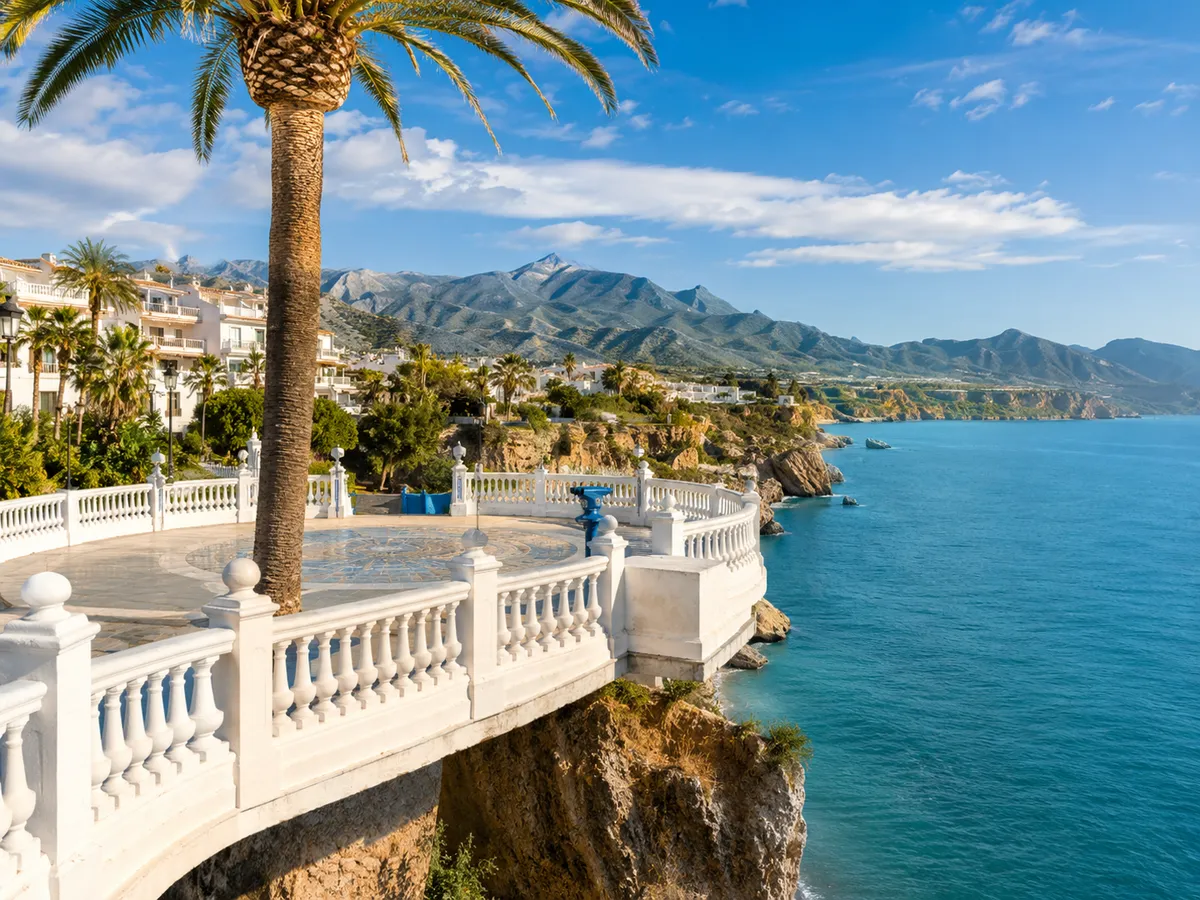
Nerja is a small town. A 50-minute cave visit plus lunch leaves you sitting in the Balcón de Europa for three hours. Frigiliana, the white hill village 7 km inland, is where people go on the day trips. It has narrow white streets, tilework, a castle ruin, views over the coast, and restaurants enough for a proper afternoon. A day trip from Málaga (9 hours, €69, 4.7 rating) bundles the cave, the Balcón de Europa, and Frigiliana with a live guide. A day trip from Torremolinos or Benalmádena (7.5 hours, €69) adds hotel pickup, good if you are staying on the coast. From Granada (8 hours, €67) you get the cave, the towns, and beach time. These trips pay for themselves compared to a solo cave visit plus taxis and guessing where to go in Frigiliana.
What to know about crowds and seasons
Best months: April to October. July is the driest. November is the wettest. Summer brings crowds — the cave is popular, not hidden. Early slots (9:15, 9:45, 10:15) are quietest. Midday slots are packed. The festival runs in summer in the Sala de la Cascada; if you are lucky, you might hear music echoing inside. School groups come in late morning. Avoid 11:00 to 12:30 if you want a quiet walk. The Fundación publishes seasonal hours; check the official site for any changes. The cave itself never closes; the tickets just run on set hours. In peak summer (July–August), book three days ahead for real choice. Off-season (November, December, February), you can usually walk in within hours.
What the €16 ticket includes and what it doesn’t
Included: timed entry, 15-language audio guide (German, Arabic, Chinese, Korean, Spanish, Dutch, French, English, Italian, Polish, Norwegian, Russian, Swedish, Portuguese, Japanese), skip-the-line entry, and the full route through all five halls. Not included: a physical guide (it is audio only), food, water, or any merchandise. Bring comfortable closed shoes; the stairs are real. Bring a layer; the 19-degree constant temperature matters. The route is not suitable for wheelchairs or strollers — that is a hard fact, not negotiable. Photography is allowed everywhere. Toilets are at the entrance. A rental audio device is available if you don’t want to use your phone. Cancellation is free up to 24 hours before.
The bottom line
If you are on the Costa del Sol and pass within 50 km of here, come. The 32-metre column is real. The 30,000 years of human history are real. The walk is doable. The cost is fair. Book the €16 online ticket. Arrive 10 minutes early. Bring water and a light layer. If you have a full day, pair it with Frigiliana and lunch; the day trips do this and do it well. Expect 50 minutes inside. Expect stairs. Expect the audio guide to explain what you are actually looking at instead of just playing music. That is how I would spend a morning if I had only one on the Costa del Sol.
Frequently asked questions
What’s the best way to visit the Cueva de Nerja?
Book the €16 online ticket with audio guide — it includes the guide, skips the queue, and costs less than the €18 gate price. If you want a full day, a guided day trip from Málaga (€69, 4.7★) bundles the cave with Nerja and Frigiliana.
How much does it cost to enter?
Gate price: €18 general admission, €14 for over-65s. Online ticket: €16 with audio guide. Day trips start at €57 from Nerja town to €69 from Málaga.
Is there a free entry option?
Yes. Free entry at 9:15 on Monday to Friday only (public holidays excluded, that turn only). No audio guide. Why the queue risk might make the €16 paid slot worth it.
How long does a visit take?
About 50 minutes on the tourist route. Plan half a day with Nerja town, a full day with Frigiliana.
What’s the route inside the cave?
Five halls in order: Vestíbulo, Belén, Cascada, Fantasmas, and Cataclismo (the 32-metre column). What each hall shows and what the closed galleries contain.
Do the slots fill up in summer?
Yes. Early slots (9:15, 9:45) are quietest; midday slots fill in July and August. Book ahead in high season; first slots matter.
Can I bring a stroller or wheelchair inside?
No. The route is nearly all stairs and railed walkways. Not suitable for pushchairs or wheelchair users.
What should I bring?
Comfortable closed shoes, a light layer over summer clothes, and your booking confirmation. The cave is 19°C year-round.
Still have questions? Email us [email protected]